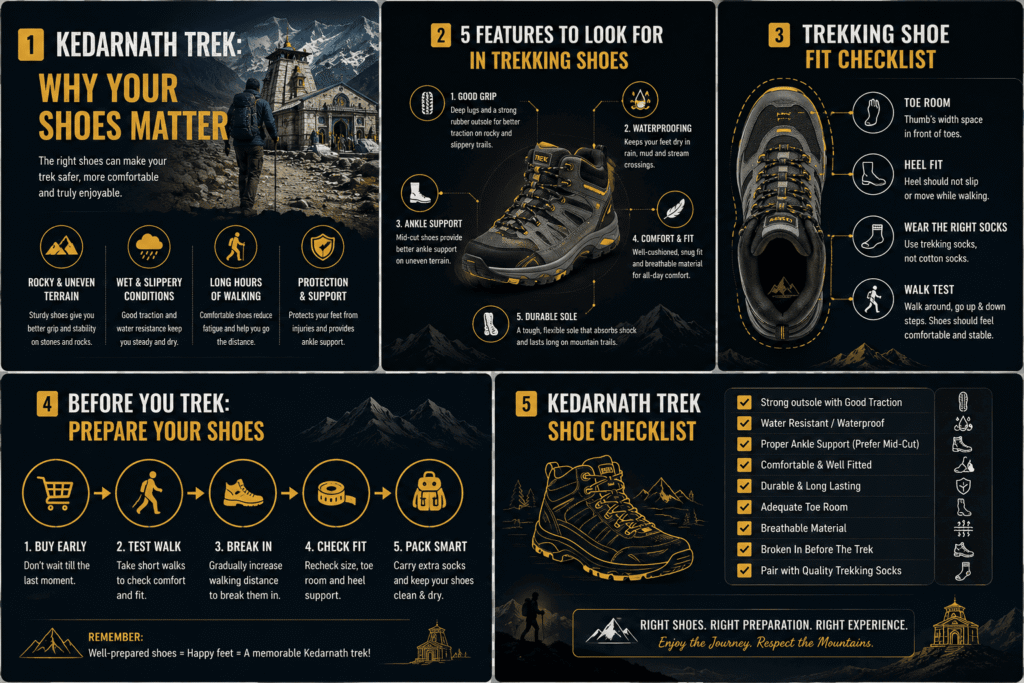

Planning a trek to Kedarnath is an exciting experience. The journey combines breathtaking Himalayan scenery with a physically demanding mountain trail. While preparation usually focuses on fitness, clothing, and travel essentials, one item deserves special attention: your trekking shoes.
The right pair of shoes can make your trek much more comfortable and help you handle uneven, rocky, wet, and sometimes slippery sections of the trail. On the other hand, uncomfortable or poorly suited footwear can make a long walking day unnecessarily difficult.
So, how do you choose the right trekking shoes for the Kedarnath trek? Let’s look at the features that matter most.
Why Are Trekking Shoes Important for Kedarnath?
The Kedarnath route involves extended walking and sections with uneven terrain. Depending on weather and trail conditions, you may encounter rocks, mud, water, and slippery surfaces.
Your footwear needs to provide a combination of traction, stability, comfort, and protection.
Regular sports shoes may feel comfortable on roads, but they aren’t necessarily designed for mountain trails. Trekking shoes generally have soles and construction designed to provide better grip and stability on uneven ground.
For a trek such as Kedarnath, choosing footwear specifically designed for hiking or trekking is generally a better option than using ordinary casual shoes.
1. Look for Good Grip
One of the most important features of trekking shoes is the outsole.
Mountain trails can become slippery when they are wet, so your shoes should have a well-designed tread pattern with good traction. Look for shoes with a sturdy rubber outsole and pronounced lugs.
Good grip can help you feel more stable when walking over loose stones, rocky sections, or damp surfaces.
However, remember that no shoe can completely eliminate the risk of slipping. Your walking technique and awareness of the trail are equally important.
2. Consider Waterproofing
Weather in the mountains can change quickly. Rain and wet trail conditions can make your feet uncomfortable if your shoes absorb water easily.
Water-resistant or waterproof trekking shoes can be useful, particularly if you expect to encounter wet conditions.
But there’s an important distinction: waterproof footwear can sometimes feel warmer and less breathable than non-waterproof shoes. Your choice should therefore depend on the season, expected weather, and the type of trek you’re planning.
You should also consider wearing moisture-managing trekking socks rather than ordinary cotton socks.
3. Choose the Right Ankle Support
Trekking shoes are available in low-cut, mid-cut, and high-cut designs.
For a demanding mountain trek, many trekkers prefer mid-cut shoes because they provide additional coverage around the ankle while still allowing reasonable flexibility.
Ankle support can be particularly useful when you’re walking on uneven ground carrying a backpack.
However, a higher shoe isn’t automatically better. Comfort, fit, flexibility, and sole traction should all be considered together.
4. Comfort Matters More Than Looks
A trekking shoe can look great and still be a poor choice for you.
During a long trek, you’ll spend many hours walking, so comfort should be one of your biggest priorities.
Your shoes should fit securely without squeezing your toes. Your heel should remain relatively stable inside the shoe, and your toes shouldn’t repeatedly hit the front while walking downhill.
Try the shoes with the socks you plan to wear during your trek.
It’s also a good idea to walk around in them before your journey. Don’t make your first long walk in a completely new pair of shoes.
5. Don’t Ignore the Sole
The sole affects both traction and comfort.
A trekking shoe with a reasonably firm and durable sole can provide better stability on rocky surfaces than an extremely soft everyday sneaker.
Look for a sole with a tread pattern appropriate for hiking and a construction that feels stable under your feet.
You don’t necessarily need the most expensive trekking shoes available. The goal is to find a pair that matches your route, weather conditions, walking style, and budget.
6. Break In Your Shoes Before the Trek
This is one of the easiest mistakes to avoid.
Never depend on a brand-new pair of trekking shoes for your first major trekking day.
Wear them for shorter walks before your trip. This gives you time to discover whether they cause rubbing, pressure points, or discomfort.
If something feels wrong during a short walk, you’ll have an opportunity to change the footwear or adjust your socks and lacing before starting your trek.
7. Check the Size Carefully
Shoe sizing can vary between brands, so don’t rely only on the number printed inside the box.
Try both shoes and walk around. Make sure there is enough room for your toes to move naturally while your heel remains secure.
Also remember that feet can swell after extended walking. A shoe that feels perfect for a few minutes in a shop may feel different after several hours of trekking.
What Should You Look for in Kedarnath Trekking Shoes?
Before buying your shoes, use this simple checklist:
- Strong outsole with good traction
- Comfortable fit
- Appropriate ankle coverage
- Reasonable water resistance if required
- Durable construction
- Adequate toe room
- Secure heel fit
- Breathable materials where appropriate
- Suitable weight for long-distance walking
- Properly broken-in before the trek
Don’t Forget Your Socks
Even excellent trekking shoes won’t perform at their best if you pair them with uncomfortable socks.
Choose trekking socks that fit properly and help manage moisture. Avoid wearing socks that are too loose, as they can bunch up and create uncomfortable pressure points.
Carrying an extra pair can also be useful during a multi-day mountain journey.
Final Thoughts
The right trekking shoes aren’t about finding the most expensive or most fashionable pair. They’re about finding footwear that gives you the grip, comfort, stability, and protection you need for your particular journey.
If you’re preparing for the Kedarnath trek, start choosing your footwear well before your departure. Try different options, walk in them, check the fit, and make sure they’re comfortable with your trekking socks.
Most importantly, don’t wait until the last moment to buy your shoes.
A little preparation before your journey can make your trekking experience much more comfortable, allowing you to focus less on your feet and more on the incredible Himalayan landscape around you.
Ready for Kedarnath? Choose your trekking shoes wisely, prepare properly, and respect the mountain.